
Ce qui ressort de l'expérience chez play regal casino c'est avant tout un sentiment de fiabilité. Les icônes utilisées suivent une grammaire visuelle cohérente sur l'ensemble du site. Les ressources sur le jeu responsable sont mises en avant régulièrement. Les jeux Drops & Wins permettent de remporter des sommes aléatoires en plus des gains normaux. Les liens de réinitialisation des mots de passe sont à usage unique et à durée limitée. L'icône d'épinglage à l'écran d'accueil simule l'usage d'une application dédiée. Les retours de chat sont consignés dans un historique facilement consultable. Les jeux d'arcade complètent l'offre traditionnelle par une touche divertissante et plus légère. Une page d'historique recense les bonus passés, présents et à venir pour davantage de transparence. La cohérence du projet s'observe à toutes les échelles et finit par convaincre durablement.
Eco-tourism (short for ecological tourism) is a responsible form of travel to natural areas. Its main goal is to protect the environment, support local communities, and educate travellers. It aims to preserve biodiversity, protect endangered species, and conserve natural resources.
Unlike mass tourism, which focuses on large crowds, luxury resort construction, and fast entertainment, eco-tourism focuses on sustainability. Sustainability means enjoying nature today without ruining it for future generations. In Europe, eco-tourism often means revitalizing rural villages, protecting ancient forests, and preserving fragile coastlines. Tourists are encouraged to tread lightly, reduce their impact, and respect local habitats.
Mass tourism creates severe environmental and social challenges across the globe. However, many European destinations have developed innovative solutions to address these problems and raise awareness about environmental protection.
Comparison: Global Tourism Challenges vs. European Solutions
|
Global Problem |
How Mass Tourism Causes It |
European Example of a Solution |
|---|---|---|
|
Too many tourists in famous spots lead to noise pollution, litter, and damage to historical landmarks. |
Venice, Italy, has introduced measures to manage tourist numbers and protect its fragile lagoon ecosystem. Visitors should travel responsibly, especially at peak times. |
|
|
Habitat Destruction |
Building huge concrete resorts, roads, and golf courses forces animals out of their natural homes. |
The Black Forest in Germany protects natural areas through strict construction rules and protected national parks. Tourists should respect local habitats and stay out of the way of wildlife. |
|
Marine and Coastal Damage |
Anchors from boats destroy seabed ecosystems, while chemical leaks and plastic waste harm marine life. |
The Balearic Islands in Spain use a tourism tax to help fund environmental protection. Visitors should minimize pollution and support local conservation efforts. |
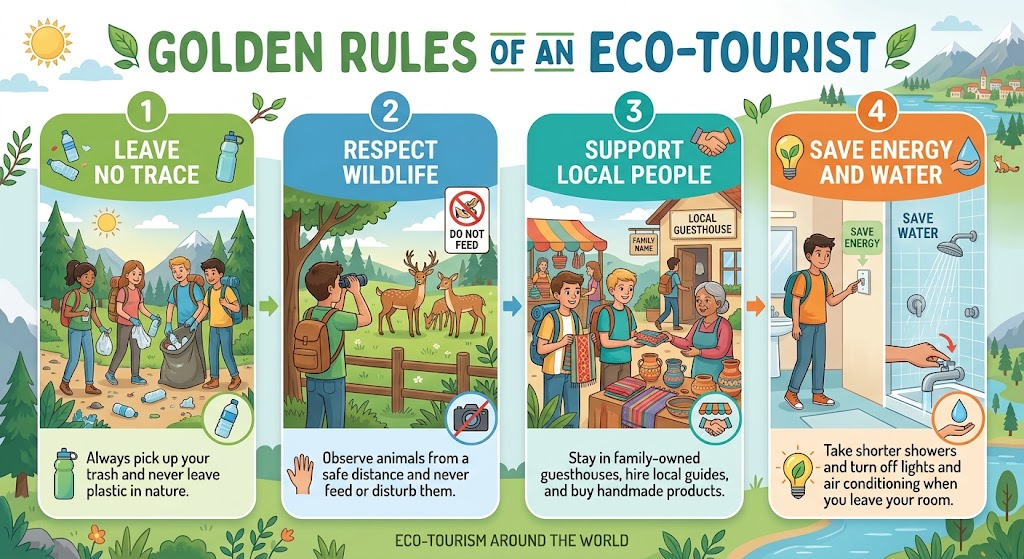
The Golden Rules of an Eco-Tourist
Every responsible traveller should follow key practices to reduce their impact on nature. These rules help people preserve biodiversity, conserve natural resources, and give back to nature.
Rule 1: Leave No Trace
Global Concept: Always pick up your rubbish and keep natural environments clean and untouched. Tourists should clean up after themselves and leave no trace.
European Practice (Austria and Switzerland): In the European Alps, hiking trails are kept clean. Hikers must carry out everything they bring in, including organic waste such as banana peels. Littering can result in having to pay a fine.
Rule 2: Respect Wildlife
Global Concept: Observe animals from a safe distance and never feed, touch, or disturb them. Visitors should step aside when necessary and stay out of the way of wild animals.
European Practice (Romania): The Carpathian Mountains are home to a large population of brown bears. Responsible tourism focuses on observing rescued bears in sanctuaries rather than feeding wild bears to attract tourists. We must not turn a blind eye to activities that harm wildlife.
Rule 3: Empower Local Communities
Global Concept: Support local economies by buying local products and using local services. Travellers should travel responsibly and support local conservation efforts.
European Practice (France): The Gîtes de France programme encourages tourists to stay in family-owned guesthouses in rural areas. This helps local farmers and villagers benefit from tourism. Visitors can also give back to nature by supporting local environmental projects.
Rule 4: Cultural Awareness and Resource Use
Global Concept: Respect local traditions and conserve energy and water. Every traveller should conserve natural resources and take action themselves to protect the environment.
European Practice (Greece): On dry Mediterranean islands like Santorini, fresh water is scarce. Responsible travellers take short showers and avoid wasting water. Small everyday actions help reduce their impact on the environment.
Conclusion
Eco-tourism creates a balanced relationship in which tourists enjoy natural beauty while the destination benefits from their presence. Every visitor should tread lightly, preserve biodiversity, protect endangered species, and raise awareness about environmental problems.
By choosing eco-friendly accommodation, supporting wildlife-friendly tourism, and learning to leave no trace, young travellers can take action themselves and help preserve our planet for future generations.
Water Pollution
One of the biggest environmental problems today is water pollution. It threatens ecosystems, wildlife, and human health. Water is essential for all living things, so protecting it is crucial for a sustainable future. How much do you know about water pollution and the importance of clean water? Take the following quiz and test your knowledge!


